
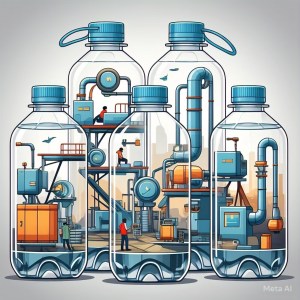
Industrial automation in our recycling plant involves integrating advanced technologies to enhance the efficiency, consistency, and quality of recycling processes. Automation helps streamline operations, reduce human intervention, and improve overall plant performance. Here’s a comprehensive look at how industrial automation can be applied in the plastic recycling industry:
Key Components of Industrial Automation
- Programmable Logic Controllers (PLCs)
- Function: PLCs are used to control machinery and processes. They handle tasks such as sorting, shredding, washing, and extrusion by executing pre-defined logic and responding to sensor inputs.
- Benefits: Ensure precision and reliability in process control, minimize manual intervention, and facilitate real-time monitoring and adjustments.
- Sensors and Actuators
- Function: Sensors monitor parameters like temperature, pressure, flow rate, and material levels. Actuators execute mechanical movements based on PLC commands, such as opening or closing valves
- Benefits: Provide real-time data for process control and enable automated responses to changing conditions.
- Conveyor Systems
- Function: Automated conveyors transport plastic materials through various stages of the recycling process, including sorting, shredding, and washing.
- Benefits: Enhance material handling efficiency, reduce manual labour, and ensure consistent material flow.
- Automated Sorting Systems
- Function: Use advanced technologies such as near-infrared (NIR) spectroscopy, electromagnetic sensors, and air jets to sort plastic materials based on type, colour, or quality.
- Benefits: Increase sorting efficiency, enhance material purity, and reduce contamination in recycled outputs.
- Data Acquisition and Management Systems
- Function: Collect and analyse data from various automation components, such as PLCs, sensors, and production equipment.
- Benefits: Provide insights into process performance, identify trends, and support decision-making for process improvements.

Implementation Steps for Industrial Automation
- Assessment and Planning
- Evaluate Current Processes: Analyse existing recycling operations to identify bottlenecks, inefficiencies, and areas for improvement.
- Define Objectives: Set clear goals for automation, such as increasing throughput, reducing labour costs, or improving material quality.
- Technology Selection
- Choose Appropriate Equipment: Select PLCs, sensors, actuators and conveyors based on your specific needs and the scale of your recycling operation.
- Integrate with Existing Systems: Ensure new automation technologies can be integrated seamlessly with existing equipment.
- System Design and Programming
- Develop Control Logic: Create control algorithms for PLCs to manage various automation tasks and processes.
- Program and Test: Develop and test software for PLCs and other control systems to ensure they perform as intended.
- Installation and Integration
- Install Equipment: Set up and install automation components, including PLCs, sensors, and conveyors.
- Integrate Systems: Ensure that all automation components work together harmoniously and are connected to data management systems.
- Training and Support
- Train Staff: Provide training for operators and maintenance personnel on how to use and troubleshoot the new automation systems.
- Offer Support: Establish ongoing support and maintenance plans to address any issues that arise.
- Monitoring and Optimization
- Monitor Performance: Continuously track the performance of automated systems to ensure they meet operational goals.
- Optimize Processes: Use data insights to adjust and improvements to the automation systems and overall recycling process.

Benefits of Industrial Automation in Plastic Recycling
- Increased Efficiency: Automation streamlines processes, reducing downtime and increasing throughput.
- Consistent Quality: Automated systems ensure uniformity in product quality and reduce variability.
- Reduced Labor Costs: Automation reduces the need for manual labour, lowering operational costs.
- Enhanced Safety: Automated systems minimize human intervention in potentially hazardous tasks, improving workplace safety.
- Data-Driven Insights: Automation provides valuable data for performance monitoring, process optimization, and decision-making.
By incorporating industrial automation into our recycling plant processes, facilities can achieve higher efficiency, better quality control, and greater operational insights, ultimately contributing to more effective and sustainable recycling operations.
Blog By
Mr. Kiran.N
IT Head – Srichakra Polyplast
fabulous! 23 2025 A Safer, More Efficient Workplace: How Our Recent Upgrades Are Making a Difference. blissful